


In this edition of Meet the Consultant, we sat down with Mr Fadi Alfaqawi, a consultant surgeon at the forefront of cataract and refractive surgery, to separate fact from fiction and explore what truly happens behind the scenes of modern eye care.
With approximately two thousand surgeries performed annually, Mr Alfaqawi is a leading voice in cataract and refractive surgery. Read on as he dispels common myths, explains the silent dangers of eye disease, and shares what truly drives him in the operating theatre.
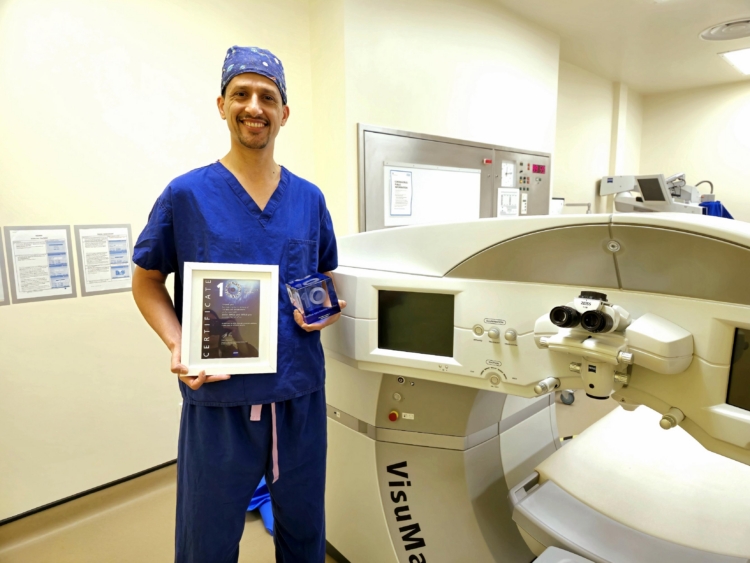
Debunking the “Carrot Myth”
Many of us grew up being told that carrots would give us the ability to see in the dark. While nutrition is a pillar of eye health, the truth is a bit more grounded in history than biology.
“The idea that carrots give you superhero night vision was actually World War II propaganda,” Mr Alfaqawi explains. “The British Royal Air Force spread the rumour to hide their secret new radar technology from the Germans. While carrots are rich in Vitamin A – essential for retinal health – eating a mountain of them won’t give you ‘super’ vision if you already maintain a healthy diet.“
The Silent Thief: Why You Might Not Notice Vision Loss
While myths about carrots are harmless, misconceptions about eye disease are not. Mr Alfaqawi highlights glaucoma as a critical concern. Often called the “silent thief of sight,” it’s characterised by a gradual erosion of peripheral vision.
The danger lies in how the brain processes information. Instead of seeing “blackness,” the brain “fills in” the missing data with surrounding imagery, masking blind spots.
“People often miss the early signs because they don’t see a change in their central vision,” says Mr Alfaqawi. “Instead, behavioural red flags appear: bumping into door frames or tripping over curbs. By the time ‘tunnel vision’ becomes obvious, up to 40% of vision can be permanently lost.”
Life Beyond Glasses: From Golf Greens to Open Water
The true value of refractive surgery often reveals itself in the moments patients return to the activities they love. Whether it is high-speed sports or quiet hobbies, the removal of “vision traps” like fogging glasses or shifting contact lenses is transformative.
- Precision Sports (Golf, Tennis, Cricket): Enhanced depth perception and contrast sensitivity. Players find it easier to judge a ball’s trajectory and read subtle “breaks” on a green without frames obstructing their view.
- Endurance Sports (Running, Cycling): Freedom from fogging, sweat-smears, and slippage. For cyclists at high speeds, the absence of lens vibration ensures safer navigation.
- Water Sports (Swimming, Surfing): Eliminates the risk of eye infections from wearing contact lenses in water. Patients gain a clear sense of orientation and lane position without the “foggy” barrier of prescription goggles.
The Most Rewarding Moments
For a surgeon performing thousands of procedures, it’s the individual stories that resonate most. Mr Alfaqawi recalls a 103-year-old gentleman with complex cataracts whose quality of life was restored through surgery.
“Every patient is special,” he reflects. “I’ve had the privilege of operating on a colleague who trusted me with her own refractive lens exchange, and a nurse whose LASIK procedure transformed both her daily life and her work. Having a peer place that level of confidence in your hands is a real privilege.”
What Makes a “Fully Rounded” Surgeon?
Becoming an expert in this field takes more than just technical skill; it’s a disciplined journey of science and human connection. Mr Alfaqawi emphasizes that a great surgeon must combine technical mastery – interpreting complex scans and understanding corneal biomechanics – with empathetic counselling.
“A surgeon must be calm under pressure and have the ethical clarity to guide patients through life-changing decisions,” he says. “But none of it happens alone. Outstanding results depend on a skilled, coordinated team, from the optometrists to the theatre staff.”
The Three Pillars to Consider When Choosing Your Surgeon
When selecting an eye surgeon, Mr Alfaqawi suggests looking for a balance of experience, technology, and trust.
- Credentials: Ensure they have a track record in the exact procedure you need. Mr Alfaqawi, for example, is among the few who have completed an advanced fellowship in Cataract and Refractive Surgery.
- Innovation: Modern vision correction relies on advanced diagnostics. A surgeon who invests in up-to-date tools can offer safer, more personalised treatment.
- The Consultation: You should walk away feeling informed and respected. A good surgeon tailors the plan to your lifestyle and visual goals rather than pushing a one-size-fits-all solution.
Experience Precision Care With a Personal Touch
Choosing the right surgeon is the most important part of your vision journey. If you would like to discuss your options for private cataract or refractive surgery with Mr Alfaqawi and his expert team, we are here to guide you every step of the way. Book a free consultation with our experts today.
By Author: Fadi Alfaqawi
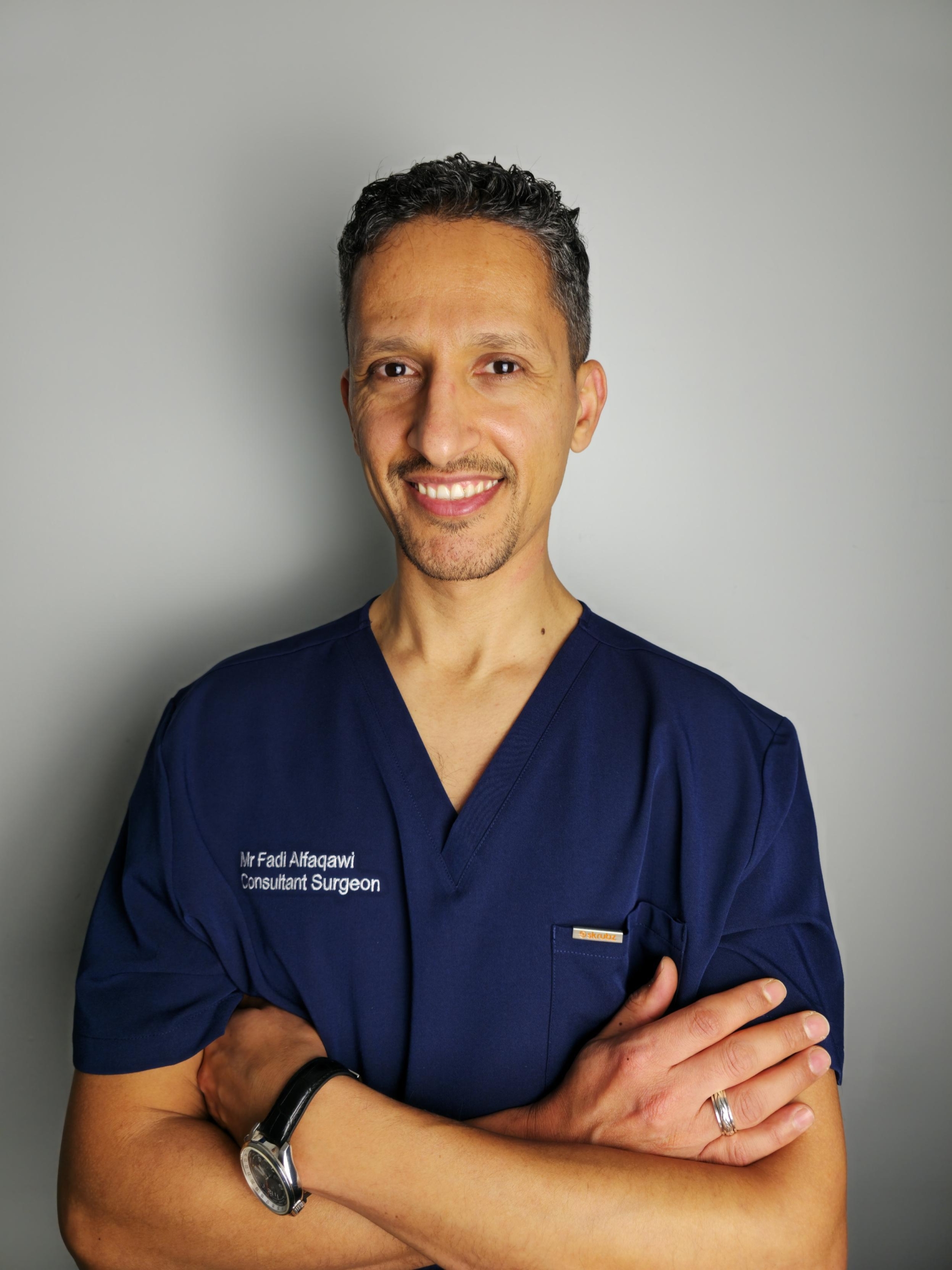
Mr. Fadi Alfaqawi is a Consultant Ophthalmic Surgeon at Optegra. His expertise includes advanced and complex cataract surgery, refractive lens exchange and advanced lens implants, SMILE, LASIK, LASEK, and ICL procedures.
Medically Reviewed Date: 6th February 2026