











By Author: Alastair Stuart
Dr Alastair Stuart is Medical Director at Optegra, and has extensive experience in both Laser eye surgery and Cataract Surgery.
Medically Reviewed Date: 1st April 2026

4.8 / 5 Rated excellent on Trustpilot

14 Top Rated Private Hospitals across the country
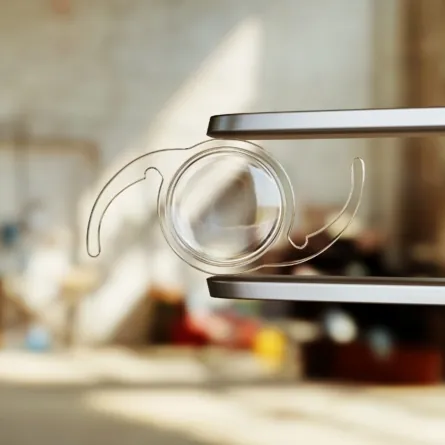
Choosing the right lens is one of the most important parts of cataract surgery or refractive lens exchange (RLE). The lens selected for your procedure will play a key role in how clearly you see after treatment and how much you may rely on glasses in the future. At Optegra, we offer a range of high-quality lens options so your surgery can be tailored to your lifestyle, visual needs and personal goals.
Every patient is different. Some people simply want clearer distance vision, while others hope to reduce or remove their need for glasses altogether. During your consultation, your consultant will take the time to understand how you use your eyes in everyday life and recommend the most suitable lens for you.
During cataract surgery or RLE, your natural lens is replaced with an artificial intraocular lens, known as an IOL. This new lens is designed to last a lifetime and can be chosen to correct different types of vision problems, including short sight, long sight and astigmatism.
At Optegra, we offer both standard and advanced lens options, giving you the flexibility to choose the level of vision correction that best fits your needs.
Monofocal lenses are designed to provide clearer vision at one distance. They are the most commonly used lens type for NHS cataract surgery, where the primary aim is to restore sharper, clearer sight and improve overall quality of vision.
These lenses do not correct astigmatism, and while some patients notice a reduced need for glasses after surgery, this is not the main purpose of standard monofocal lenses. Most people will still need glasses for either distance tasks, such as driving, or near activities like reading.
Standard monofocal lenses offer a reliable and highly effective option for patients seeking straightforward vision improvement, with excellent clinical results and a proven track record.
*Actual results may vary.
Toric monofocal lenses are specially designed to correct astigmatism at the same time as improving clarity of vision. Astigmatism is a common vision problem caused by an irregular shape of the clear front part of the eye (the cornea) or sometimes the lens inside the eye.
Like standard monofocal lenses toric lenses, have a single focus point (correcting either for distance vision or reading). t By correcting astigmatism they can significantly improve uncorrected vision.
*Actual results may vary.
Enhanced monofocal lenses provide a slightly greater range of clear vision than standard monofocal lenses, especially at intermediate distances (such as computer screens), while still offering high image quality and contrast. Unlike multifocal or EDoF lenses, they do not split light, so the risk of night vision disturbances like glare or haloes remains very low. Most patients will still need glasses for close-up reading tasks but may find less dependence on glasses for intermediate activities.
*Actual results may vary.
Extended Depth of Focus, or EDoF, lenses are designed to provide a broader range of clearer vision compared to standard monofocal lenses. They can help many patients enjoy greater independence from glasses, particularly for everyday tasks at distance and intermediate ranges.
EDoF lenses are typically used in two main ways:
EDoF for Distance
This option is set to give clearer distance and intermediate vision without glasses. It is ideal for activities such as driving, watching television and using a desktop computer. Most patients can work comfortably on screens with standard font sizes, although reading glasses will still be needed for close-up tasks like reading small print.
EDoF Monovision
With this approach, one eye is set for distance vision and the other for near vision. This can provide a wider range of clear vision overall and reduce the need for glasses in many situations. Some patients may still require glasses for fine detail work at both near and far distances.
Monovision does involve an adjustment period, and it is not suitable for everyone. There is an adaptation period with monovision, for this reason, patients will be tested before surgery to ensure their eyes can adjust to having different focus points in each eye. Your consultant will carefully assess whether this option fits your lifestyle and visual needs before recommending it.
EDoF lenses offer a flexible and effective solution for patients looking to reduce their reliance on glasses while maintaining natural, comfortable vision.
*Actual results may vary.
Multifocal lenses are designed to provide clearer vision at multiple distances, from near to intermediate and far. They work by focusing light in different ways, helping many patients achieve a high level of independence from glasses after surgery.
For people who want to reduce or remove their reliance on glasses for activities such as reading, using digital devices and driving, multifocal lenses can be an excellent option. Most patients find they can manage day-to-day tasks comfortably without spectacles.
As with any advanced lens technology, there are some important considerations. Multifocal lenses can sometimes cause visual effects in low light, such as glare or halos around lights, particularly at night. Some patients may also notice a slight reduction in contrast or sharpness compared with single-focus lenses.
For the majority of people, these symptoms improve as the brain adapts over time. In a very small number of cases, persistent symptoms can occur. If this happens, a lens exchange procedure can be considered, although this would usually mean returning to the use of glasses.
Your Optegra consultant will carefully discuss the benefits and limitations of multifocal lenses with you, helping you decide whether they are the right choice for your lifestyle and visual expectations.
*Actual results may vary.
Not every lens type is suitable for every patient. Choosing the best option depends on several important factors, including the health of your eyes, your prescription, and your personal vision goals.
During your consultation at Optegra, your consultant will carry out a detailed assessment to determine which lenses are most appropriate for you. This will include measuring your eyes, reviewing any existing conditions, and discussing how you use your vision in everyday life.
Some lenses may not be recommended if you have certain eye conditions, such as significant astigmatism, glaucoma, macular problems or dry eye disease. Your lifestyle and visual expectations are also key considerations. For example, patients who do a lot of night driving or detailed close-up work may be better suited to specific lens types.
The most important part of the process is making an informed decision. Your consultant will take the time to explain the benefits and limitations of each lens option, helping you choose the solution that offers the best balance of vision quality, comfort and independence from glasses.
At Optegra, every treatment plan is personalised to you, ensuring you receive the safest and most suitable lens for your individual needs.

Not ready for a consultation? Learn more about our range of treatments, doctors and hospitals
Information pack
Book your virtual consultation with our top rated eye hospitals
Book Now
We'll answer any questions you may have about treatment.
Private: Mon-Thu: 8am – 6pm, Fri: 8am – 5.30pm NHS: Mon-Fri: 8am – 6pm

Manage your existing bookings & payments
Patient Portal
Dr Alastair Stuart is Medical Director at Optegra, and has extensive experience in both Laser eye surgery and Cataract Surgery.
Medically Reviewed Date: 1st April 2026
