




By Author: Amir Hamid
Mr. Amir Hamid is Chief Medical Officer at Optegra and an expert refractive surgeon, based in London.
Medically Reviewed Date: 29th September 2026

4.8 / 5 Rated excellent on Trustpilot

14 Top Rated Private Hospitals across the country


Daily appointments available from the convenience of your own home.
Private Treatments Only.
NHS queries 0207 509 4186
Daily appointments available from the convenience of your own home.
Private Treatments Only.
NHS queries 0207 509 4186
A thorough and effective aftercare process is essential for laser eye surgery. Following treatment, you must attend your follow-up appointments to ensure a smooth recovery. Your aftercare appointments will allow you to be closely monitored and help to reduce the risk of complications whilst ensuring you achieve the best visual results possible.
At Optegra, we provide a structured framework designed to monitor your progress and safeguard your ocular health at every stage. There are several measures patients can take to minimise their laser eye surgery recovery time and ensure a seamless transition to clear vision.
At Optegra, we are proud to offer a well-rounded laser eye surgery aftercare programme to all our patients to ensure that every individual makes a speedy recovery.
While each corrective technique – whether LASIK, LASEK, ReLEx SMILE, or PRESBYOND – has its own unique laser eye surgery recovery time, the following clinical guidance outlines the standard milestones of the post-operative journey.
Immediately after your treatment, you will be required to stay in the eye health clinic or hospital for about half an hour or so until you feel completely comfortable making your way home.
Your vision will likely be slightly blurry, but you may notice that it is still much clearer than it was without glasses before your treatment. This is a standard response to the procedure. In the first few hours, many patients report that their vision fluctuates as the corneal tissue begins to adjust to its new shape.
You will be given topical steroid, numbing (anaesthetic), lubricating, and antibiotic drops to use (frequently) for the first few hours after surgery, until the following morning, when you will be reviewed by your treating surgeon. Follow the instructions shared with you carefully and make sure you have clean, dry hands when instilling these drops. This will ensure you are comfortable post-surgery.
You cannot legally drive immediately after your procedure. It’s essential to have organised transport (avoiding public transport) or have a family member or friend with you to help you get home.
Recovery from laser eye surgery is remarkably fast, with most patients achieving driving-standard vision within 24 to 48 hours. However, complete healing and final visual stabilisation typically take between three to six months.
The exact timeline naturally depends on the specific procedure you undergo. For treatments such as LASIK and ReLEx SMILE, the initial healing phase is highly accelerated. Patients usually notice a dramatic improvement in their visual clarity by the following morning and can safely return to work and light daily activities within one to two days.
LASEK recovery is more of a gradual process, generally requiring three to five days for the surface of the eye to regenerate before your vision begins to sharpen significantly.
While you can resume the majority of your routine within the first week, your eyes will continue to undergo subtle neural adaptation and tissue healing beneath the surface. Throughout this extended period, it is entirely normal to experience minor fluctuations in your visual focus or temporary dryness, both of which will gradually resolve as your eyes fully adjust to their new profile.

The first two days are key to successful laser eye surgery recovery. We advise avoiding showers during the first 24 hours and taking one to two days off work, especially following LASIK, ReLEx Smile, or LASIK, to allow your eyes to fully rest.
By the second day, most patients notice significant improvements in clarity, though some postoperative symptoms such as glare, halos around lights, or dry eyes may persist.
During this window, you will attend a follow-up exam where our clinical team reviews your eye health. This appointment is vital to confirm that the healing process is unfolding correctly and to determine when it is safe for you to resume driving or using digital devices like tablets and smartphones.
It’s important to remember that individual healing rates and responses to surgery can vary widely. Some patients might have near-perfect vision by the second day, while others may take longer to reach their best vision.

During the first week, you must reduce the chances of exposing your eyes to irritation. For instance, do not wear any eye makeup, apply any products around your eyes, or get soap or water in your eyes. Try to avoid being around smoke or people who smoke. This is also the case for dusty environments, as this can increase the temptation and chances of rubbing your eyes. Rubbing your eyes during the first stages of aftercare can cause severe discomfort and increase the risk of complications.
Consultants also advise you to avoid alcohol consumption for one week after your surgery, as alcohol can interfere with your body’s healing process and cause dehydration in your eyes.
After day three, your eyes will have recovered enough for you to start some exercise again, such as walking or gentle cycling. Avoid strenuous activities and keep a steady pace to ensure you don’t sweat. We advise waiting at least a week before practising yoga and aerobic exercises. If you lift weights, we advise waiting at least two weeks before continuing with your exercise routine. Your consultant will also advise at your follow-up appointment on what activities you can do and the expected timeframe for doing so.
Rubbing your eyes after LASIK surgery can dislodge, fold, or crease the delicate corneal flap created during the procedure, potentially causing severe pain, compromised vision, and requiring urgent surgical intervention.
During early post-operative recovery, this microscopic flap rests on the surface of your eye without stitches, relying entirely on natural cellular suction to heal. Applying friction or pressure can easily cause this fragile tissue to shift out of place, while touching the area introduces harmful bacteria that significantly increase the risk of infection.
If you experience a gritty or itchy sensation as your eye heals, avoid touching your face entirely. Instead, generously use your prescribed lubricating eye drops to safely soothe surface irritation, restore moisture, and safeguard your visual recovery.
A month after laser eye surgery, your eyes will be well on the road to recovery. You will likely find that any glare or dryness has settled down significantly.
If you have a holiday or a trip planned shortly after your surgery, just let your surgeon know during your check-up. They can give you specific advice on things such as flying, ensuring your laser eye surgery recovery stays on track while you enjoy your new vision. Your sight would have adjusted enough for you to enjoy sports such as tennis, football, swimming, cricket, and snowboarding.
As with any type of surgery, there are always potential side effects. Following surgery, you may experience one or more of these side effects, or you may not experience any at all. Everyone is different. So, let’s take a look at some of the possible side effects of laser eye surgery in further detail:
Some people experience a mild halo effect or a glare around bright lights, especially at night, once they have had laser eye treatment. In most cases, this will reduce significantly within the first month after treatment. After roughly three months, you should not have any issues with this whatsoever, but any lasting effects can usually be managed with the help of your ophthalmic surgeon.
It is not uncommon to experience slightly reduced sharpness of vision or hazy vision, often likened to soft focus, for the first few weeks following treatment, especially in low-light environments.
Some people experience some dryness in their eyes after laser eye treatment. You will be provided with eye drops in order to manage any discomfort. Your eyes will return to their pre-surgery state once they begin to heal.
LASER eye surgery is painless; however, you may experience temporary discomfort for the first few days after treatment, especially if you have had LASEK surgery. This might include symptoms such as light sensitivity and a mild gritty feeling, and patients often find wearing sunglasses when outside helpful.
At Optegra, our world-renowned surgeons have executed tens of thousands of successful laser eye surgery procedures. If you have any concerns, we’re always on hand to help and advise.
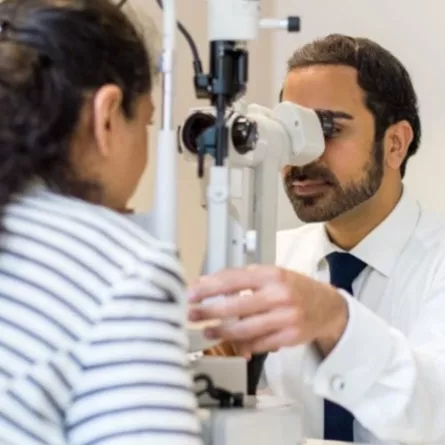
Many people overlook the importance of investing in their aftercare following laser eye surgery. In order to ensure you get the best possible results from your surgery, it’s important to attend all your appointments and listen to the advice of your ophthalmic surgeon.
At Optegra, we offer patients a follow-up appointment the day after surgery to check on their progress, which is a great opportunity to speak to the clinical care team about any questions or concerns they may have. After that, you’ll have routine checks throughout the following year, and you can always contact us if you have further queries. This helps to ensure that any problems are picked up early and can be addressed as soon as possible.
At Optegra, you can be assured of comprehensive aftercare support to ensure you receive the best possible laser eye surgery recovery following your treatment.
Our aftercare plan for laser eye treatment is as follows for LASIK, LASEK, ReLEx SMILE, and Presbyond*:
*For Presbyond Enhancement treatment after 1 year, a subsidised fee applies.
Enhancement Treatment – Further treatment to optimise your vision. Your consultant will discuss this with you if required.

Not ready for a consultation? Learn more about our range of treatments, doctors and hospitals
Information pack
Book your virtual consultation with our top rated eye hospitals
Book Now
We'll answer any questions you may have about treatment.
Private: Mon-Thu: 8am – 6pm, Fri: 8am – 5.30pm NHS: Mon-Fri: 8am – 6pm

Manage your existing bookings & payments
Patient Portal
Mr. Amir Hamid is Chief Medical Officer at Optegra and an expert refractive surgeon, based in London.
Medically Reviewed Date: 29th September 2026
